
Rooted in Regeneration
How Indigenous farming practices rebuild soil, protect farmers, and secure America’s food supply
This is the third article in EarthShare’s America’s Farm Crisis series. To stay up to date on our latest releases, you can sign up for our newsletter, and check out our previously published articles here.
America’s small farms are disappearing, our farmworkers are under-protected, and climate change is altering how much and how efficiently we can grow our food. Fortunately, a millennia's-old practice, honed and stewarded by Indigenous communities around the world, is the promising solution we need to ensure a healthier, safer, and more productive and food secure world.
It’s time for U.S. agriculture to fully embrace regeneration.
The Broader Purpose of Regenerative Agriculture
Often used in tandem with agroecology, which amplifies fairness, equity, and social justice in relationship to agriculture, regenerative agriculture focuses on healing our lands—and our food system—from the ground up through agricultural practices that reinforce soil health. Healthier soil leads to healthier food, which leads to healthier people; farmers, farmworkers, and end-consumers alike.
Like agroecology, regenerative agriculture is rooted in Indigenous knowledge and practices that have been around for thousands of years. From no-till farming to intercropping to gravity-fed irrigation and agroforestry, these agricultural practices emerged from long-standing Indigenous traditions that prioritize balance and restoration, working with the land to produce healthier outcomes for both people and the planet. By these principles and practices, every person and element of our food system—including our land—is valued and respected.
ACHIEVING REGENERATION
Today, Indigenous communities are stewards and custodians to more than one-third of the world’s most biodiverse lands and waters. Efforts to improve Indigenous land rights and holdings—including the modern Land Back movement—are closely linked to the expansion of regenerative agriculture as we look to Indigenous communities as experts and leaders in developing a healthier, more equitable, just, and sustainable agricultural future that is capable of feeding us all.
Creating a future where regenerative agriculture is the new norm starts with elevating the voices of experts who have time-tested knowledge about the services and functions of our land and how we can adapt or replace modern agricultural processes to better protect and amplify these functions.

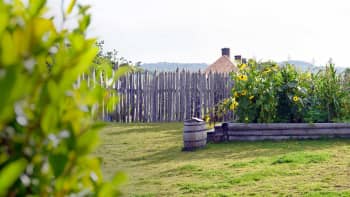
D’Real Graham of Spice Creek Farm in Maryland uses regenerative practices to rebuild soil on a former tobacco farm with compost, drip irrigation, and pollinator plantings. (Maryland Farm Bureau/Facebook)
D’Real Graham of Spice Creek Farm in Maryland uses regenerative practices to rebuild soil on a former tobacco farm with compost, drip irrigation, and pollinator plantings. (Maryland Farm Bureau/Facebook)
“Regenerative agriculture focuses on actively building health into the system, beginning with increasing soil fertility. [It’s] a holistic systems approach that starts with the soil, and also includes the health of the animals, farmers, workers and community.”
Regenerative agriculture is a whole-system improvement, not a bandage on one or two key issues. The result is a healthier, stronger food system that is safe, efficient, self-sufficient, and more productive. Benefits of switching to regenerative agricultural practices include:
- Healthier soil with increased carbon storage
- Improved resource efficiency and water conservation
- Crops more resilient to climate-related changes in temperature, precipitation, and extreme weather events
- Healthier livestock
- Increased pest resistance without the need for chemical reinforcement
- Increased biodiversity for healthier crops and ecosystems at large
- Long-term farmer prosperity
- Healthier people
- Fortified food security in the U.S.
If all these incredible benefits are possible to achieve with regenerative agriculture, it begs the question: what exactly are we doing right now that isn’t working?
“Simply put, Regenerative Agriculture is comprised of the food and fiber systems that give more than they take. It is a set of farming and land management practices that rebuild living soils, increase on-farm biodiversity, and move carbon from the air into the earth.”
The Current State of Our Food and Lands
WHAT WE’RE GROWING
The United States is more than 3.8 million square miles in size and the fourth largest country in the world by land area. According to the United States Department of Agriculture (USDA), a whopping 39% of this land (though some data sources indicate it could be as much as 46%) is dedicated specifically to agriculture and farming. This includes both croplands (for growing food) and grazing lands for livestock.
Crop production in the U.S. is dominated by corn, soybeans, and wheat. You may sometimes hear these crops referred to as “cash grains” when they make up at least 50% of the value of a farm's products sold. Together, these three crops account for nearly 24% of all farmland usage. In comparison, the land usage for all fruit and tree nut production in the United States accounts for just 0.59% of farmland usage. One of the most obvious distinctions between these two is that, unlike food crops, the vast majority of corn, soybeans, and wheat crops aren’t grown for human consumption. Instead, they’re being used primarily for animal feed and alternative fuel.
Roughly 20% of all U.S. crops are exported every year, but this number skews much higher for cash crops, like soy, which has reached export rates as high as 52%. This is significant because it means U.S. farmers are producing cash crops at a disproportionate rate, relying far more on international markets than U.S.-based human consumers. This, in turn, destabilizes U.S. food security because it creates a damaging cycle: U.S. farmers are more susceptible to sudden changes in trade (like the 2025 tariffs imposed by the Trump Administration), more farms grow bankrupt, and there are fewer producers of food for human consumption.

Corn, soybeans, and wheat—often called “cash grains” or "cash crops"—are grown across nearly a quarter of all U.S. farmland. (Chris Flaten/Pexels)
Corn, soybeans, and wheat—often called “cash grains” or "cash crops"—are grown across nearly a quarter of all U.S. farmland. (Chris Flaten/Pexels)

Most cash crops provide food for livestock and biofuel rather than for people. Here, cows feed in a barn in rural North Carolina. (Mark Stebnicki/NC Farm Bureau)
Most cash crops provide food for livestock and biofuel rather than for people. Here, cows feed in a barn in rural North Carolina. (Mark Stebnicki/NC Farm Bureau)
USDA divides U.S. farmland into nine Farm Resource Regions. The Heartland—marked in yellow—has the most farms and cropland, and cash grains like corn and soybeans dominate production. (Credit: USDA Economic Research Service)
USDA divides U.S. farmland into nine Farm Resource Regions. The Heartland—marked in yellow—has the most farms and cropland, and cash grains like corn and soybeans dominate production. (Credit: USDA Economic Research Service)
"Organizing at the community level to support local food infrastructure increases income and jobs, especially in rural communities that lack food security, and replaces food imports with fresh, wholesome locally grown and processed food."

Monocropping—growing one species of crop in the same field each year—depletes the soil of essential natural compounds like nitrogen, forcing farmers to use chemical fertilizers to stimulate crop growth. (Wolfgang Weiser/Pexels)
Monocropping—growing one species of crop in the same field each year—depletes the soil of essential natural compounds like nitrogen, forcing farmers to use chemical fertilizers to stimulate crop growth. (Wolfgang Weiser/Pexels)

Regenerative work like planting cover crops on recently harvested fields—shown here in New England—restores nutrients to depleted soil. (Lance Cheung/USDA)
Regenerative work like planting cover crops on recently harvested fields—shown here in New England—restores nutrients to depleted soil. (Lance Cheung/USDA)

Drip irrigation—demonstrated here—sends water directly to root system, using up to 40% less water than traditional sprinklers. (Peggy Greb/USDA)
Drip irrigation—demonstrated here—sends water directly to root system, using up to 40% less water than traditional sprinklers. (Peggy Greb/USDA)
HOW WE’RE GROWING IT
Modern agricultural techniques as they’re currently used are highly damaging to land and soil health, as well as the overall quality of our food. Here are a few prime examples:
Monocropping has become the default for crop growth in modern American agriculture. Farmers grow one species of crop in the same plot of land year after year, and this depletes the soil of naturally occurring, essential compounds (like nitrogen) that are needed for both plant growth and soil stability. Farmers must then rely on abundant use of chemical fertilizers to replenish these compounds and stimulate crop growth.
Some farmers use crop rotation, planting different crops in a planned sequence to replenish nutrients, interrupt pest cycles, and support soil health. These benefits can be strengthened by complementary practices such as cover cropping and greater crop diversity. Unfortunately, due to the severity of the soil depletion, this is only truly successful when systematically paired with regenerative techniques like cover cropping and crop diversity.
Agricultural irrigation is the number one source of surface and groundwater withdrawals and consumption in the United States today (39%). In comparison, water for public use (everything from drinking water to swimming pools) comes in at around 12%. Widely used sprinkler irrigation has been shown to lead to significant water loss through evaporation and runoff, reducing overall efficiency and increasing operating costs. This water runoff picks up harmful nearby substances (animal feces, fertilizer, eroded soil) and then leaks back into our surface water and groundwater systems, negatively impacting ecological health and overall water quality. Transitioning to more precise forms of irrigation, such as drip irrigation, has been shown to reduce water consumption by up to 40% by introducing water directly to a plant’s roots.
U.S. agriculture relies heavily on fossil fuels to power buildings, machinery, tools, and food transportation. In addition, frequently used farm inputs such as fertilizers, herbicides, pesticides, fungicides, and plastic-based food packaging all depend on fossil fuels as a key component in their production. Agriculture is responsible for at least 15% of all annual fossil fuel usage. This leaves our food system particularly vulnerable to the volatile pricing and availability of fossil fuels; not to mention, the damaging impact they have on our climate, which also threatens overall food security.
THE EFFECTS OF CLIMATE CHANGE
Climate change, prompted in large part by the excessive release of carbon dioxide into our atmosphere from the burning of fossil fuels, is rapidly changing temperature, precipitation, and extreme weather patterns across the globe. The impacts of these changes on agriculture cannot be overstated. From altered growing seasons to water scarcity to dangerous working conditions due to excessive heat, climate change is actively influencing the natural states and resources that have long-been relied on to grow our food. This is particularly important as our growing global population is demanding more food than ever before.
Extreme temperatures and prolonged heatwaves in tandem with the increasing frequency of early and late frosts (frosts that occur before the growing season ends or just after it begins) in recent years have wreaked havoc on crop growth and the availability of food worldwide.
Likewise, extreme precipitation and extreme drought events have also been on the rise in different regions across the United States and around the world. In both cases, the resulting crop damage due to related insect outbreaks, wildfires, nutrient oversaturation, and pollution exposure has had wide-ranging effects on agricultural yields and food availability. Low water levels in major freshwater bodies commonly used for food transport can also lead to higher shipping costs.
In fact, none of these outcomes are cheap—not for farmers, and certainly not for the end consumer.
In 2024, agricultural losses due to 27 billion-dollar natural disasters surpassed $20 billion; an estimated $9 billion of which was not covered by insurance, coming directly out of the pockets of American farmers. As extreme weather and climate disasters grow in frequency, it’s time to turn to an agricultural solution that amplifies the sustainability and longevity of our food system.

Flood waters from Arkansas' Black River completely cover the central buildings of a farm. (Samir Valeja/FEMA)
Flood waters from Arkansas' Black River completely cover the central buildings of a farm. (Samir Valeja/FEMA)

USDA researchers examine drought-cracked soil, as record heat diminishes crop yields. (Scott Bauer/USDA)
USDA researchers examine drought-cracked soil, as record heat diminishes crop yields. (Scott Bauer/USDA)
“On land, heat events have caused double-digit crop losses, suppressed forest productivity by up to 50 percent, and led to mass livestock mortality events involving hundreds of thousands of animals.”
Regeneration at Play
REBUILDING SOIL HEALTH
Soil health is a long-term investment. That's why Land Stewardship Project (LSP) is working with farmers and ranchers across Minnesota to bring modern soil health information and strategies to the frontlines of our food system.
Through workshops, on-farm demonstrations, instructional videos, and dedicated research initiatives, LSP is engaging farmers in the ecological regeneration of this critical resource. Strategies for achieving this goal are diverse and include planting cover crops, annual crops, and integrating livestock and perennials on active croplands to improve the soil's microbiome.
LSP's Soil Health, Water Health & Climate Change Pocket Guide is also a handy resource for farmers, policymakers, and educators who want to better understand the importance of our soil.
In 2022, Land Stewardship Project launched a billboard campaign in Minnesota promoting the power of soil health. (Land Stewardship Project)
In 2022, Land Stewardship Project launched a billboard campaign in Minnesota promoting the power of soil health. (Land Stewardship Project)
"Soil regeneration is the answer to restoring the soil’s natural productivity, improving profits, protecting water quality, building resiliency into crops, sequestering carbon, and helping to reverse the trends of climate change."

Students plant native wildflowers for pollinators in Asheville, North Carolina. Groups like RAFI help farms and communities grow habitats like this to support healthier crops and ecosystems. (Gary Peeples/USFWS)
Students plant native wildflowers for pollinators in Asheville, North Carolina. Groups like RAFI help farms and communities grow habitats like this to support healthier crops and ecosystems. (Gary Peeples/USFWS)
POLLINATORS & SEEDS TO PRESERVE BIODIVERSITY
To grow strong, healthy, and nutritious crops, biodiversity is absolutely essential. Having a variety of plant, particularly native plant, and animal species helps to enrich soil and evenly distribute key nutrients. Rural Advancement Foundation International (RAFI) works with farmers to take a multi-pronged approach to regenerating healthy lands for food growth. Through their Pollinator Habitat and Seed Stewards program, RAFI helps to create and conserve local pollinator populations in addition to native seed varieties specific to North Carolina. With more than 15 billion native wildflower seeds distributed and planted, RAFI and their farm partners are generating healthier ecosystems to better support human food demand.
RAFI's North Carolina Pollinator Toolkit provides instructions on everything from seed species selection to site specifications and planting prep.
Farmer and rancher Jim McClain poses at South Carolina's Leatherneck Ranch, which uses regenerative practices keep pastureland soil nutrient-rich. (Lance Cheung/USDA)
Farmer and rancher Jim McClain poses at South Carolina's Leatherneck Ranch, which uses regenerative practices keep pastureland soil nutrient-rich. (Lance Cheung/USDA)
“Despite the critical need to rebuild soils and reshape our food systems, Regenerative Agriculture receives only 7% of total climate finance.”
THE SUSTAINABLE FINANCE IMPERATIVE
To make the wide-sweeping changes necessary to fully embrace a regenerative agriculture future, farmers are going to need financial assistance. There are inherent risks and significant upfront costs associated with the transition to a regenerative farming layout.
Already working within narrow margins, many farmers don’t have the resources to front the time or cost this transition would require. Similarly, there can be steep learning curves when it comes to the adoption of regenerative practices, technologies, and tools.
To achieve positive change at the rate it’s needed, collaboration across the agriculture and finance sectors is going to be absolutely essential. It’s estimated that a global shift from current agricultural practices to a regenerative system could require as much as $430 billion per year. Current spending in this area amounts to roughly $44 billion annually.
What could improved climate finance opportunities in this area look like?
- Favorable lending and/or insurance terms and protections for farmers, so they have more time and leniency when paying back transition-based loans.
- Up-front payments/guarantees so farmers can be sure they’ll get paid for their harvest, reducing the overall risk of transitioning to regenerative practices.
- Carbon offsetting programs, where farmers are paid to increase the soil health (and carbon sequestration capacities) of their farmlands.
- Positive environmental outcome payments.
Here are some examples of existing sustainable finance programs:
- Indigo Ag’s Carbon By Indigo Program
- Regenerative Agriculture Finance Program
- Soil and Water Outcomes Fund
Now is the time to double down on the infrastructure that works and begin to expand the capacity of both green finance and our farmers.
🌱🌱🌱

Native fruit trees bloom beside new homes at Thunder Valley, a Lakota-led community on the Pine Ridge Reservation where food, housing and health are planned together. (Michael Frye/USDA Rural Development)
Native fruit trees bloom beside new homes at Thunder Valley, a Lakota-led community on the Pine Ridge Reservation where food, housing and health are planned together. (Michael Frye/USDA Rural Development)

Land Systems Director Brandon Big Eagle shows visitors the orchard, part of a regenerative agriculture and food sovereignty program. (Michael Frye/USDA Rural Development)
Land Systems Director Brandon Big Eagle shows visitors the orchard, part of a regenerative agriculture and food sovereignty program. (Michael Frye/USDA Rural Development)

At UpRoot Center’s Harvesting Narratives summit in Indiana, farmers and advocates learn to tell their own food system stories. (Uproot Center)
At UpRoot Center’s Harvesting Narratives summit, farmers learn to tell their own food stories. (Uproot Center)

RAFI pairs hands-on support for farmers with policy advocacy, working toward a fairer food system for farms, families, and communities. (RAFI/Facebook)
RAFI pairs hands-on support for farmers with policy advocacy, working toward a fairer food system for farms, families, and communities. (RAFI/Facebook)
What You Can Do to Help
Support groups and organizations in your community and across the nation who work every day to move us toward a regenerative farming future. Here are a few we highly recommend:
- Western Organization of Resource Councils (WORC) is a network of grassroots groups across the U.S. that provides member training, coordinates issue-specific work, and advances the vision of a democratic, sustainable, and just society through community action. Some of their focus areas include: fair trade, food safety, livestock market reform, and clean energy for local communities.
- Land Stewardship Project (LSP) fosters an ethic of farmland stewardship, promotes sustainable agriculture, and helps develop healthy, vibrant rural communities through new farmer training, local organizing, and community-based food systems in Minnesota. LSP aims to create transformational change that prioritizes stewardship, justice, fairness, democracy, health, and community.
- Rural Advancement Foundation International (RAFI) recognizes that our food systems are deeply inequitable. RAFI works across agricultural sectors, building coalitions and combining on-the-ground practical services and policy advocacy to ensure farmers have access to the tools they need to make the right choices for their farms, families, communities, and the environment.
- Transformational Investing in Food Systems (TIFS)* equips investors, funders, intermediaries, and businesses with the strategies, tools, and financial innovations needed to direct capital toward regenerative and agroecological food systems. Through applied research, collaborative design, and field-tested pilots, TIFS bridges funding gaps for regenerative food production.
- UpRoot Center* is a narrative hub, supported by a diverse coalition of community members and grassroots organizers, designed to disrupt the status quo of a food system that hurts people, animals, and the planet. UpRoot Center provides rapid response communications and narrative-driven policy solutions on the leading edge of food system reform.
*A fiscally sponsored project of EarthShare.
LEARN MORE
- Better understand key regenerative farming practices, from climate change adaptation to integrated pest management, with Rainforest Alliance.
- RAFI’s Farmer Advocacy services (and hotline) provides expert knowledge and tailored support for farmers facing a financial crisis.
- The Ear to the Ground podcast tells stories from the frontlines of food, agriculture, and our lands (with 397 episodes and counting).
- Review the Soil Health, Water & Climate Change pocket guide for a comprehensive overview of soil-smart farming in just 50 pages.
- Funders for Regenerative Agriculture (FORA) dispel common regenerative ag misconceptions in their Regenerative Agriculture and Climate brief.
- One Earth’s Minding the Gaps report looks at the current state of climate funding for regenerative agriculture and where resources are most needed.
Our AMERICA'S FARM CRISIS series invites you to better understand what’s at stake in America’s food and agricultural system, hear directly from organizations working alongside farmers on the frontlines, and explore how philanthropy can help drive lasting change. By connecting insight with action, we aim to empower donors to support solutions that strengthen farmers, rural communities, and the future of food.
MORE ARTICLES >>>

Farmers with Land Stewardship Project visit an urban agriculture site on reclaimed land in Minnesota. (Land Stewardship Project/Facebook)
Farmers with Land Stewardship Project visit an urban agriculture site on reclaimed land in Minnesota. (Land Stewardship Project/Facebook)
 Built with Shorthand